


What is an Organic Biostimulant and how does it work in the plant?
What is an organic biostimulant and how does it work? Learn about its impact on plant physiology, how it acts in the nutrient absorption process, and its impact on agricultural yield and the profitability of your crops.
Alfredo SV
Beyond traditional fertilization
In modern agriculture, increasing yield per hectare no longer depends solely on increasing fertilizer application rates. Today, the challenge is to optimize crop physiology so that it makes better use of available nutrients and responds efficiently to stress conditions.
In this context, a strategic tool emerges: The Organic Biostimulant.
But what is it really? Is it a fertilizer? Is it a nutrient corrector? Or does it serve a different function within the crop?
Understanding its function is key to making sound technical decisions and improving crop profitability.
What is an Organic Biostimulant?
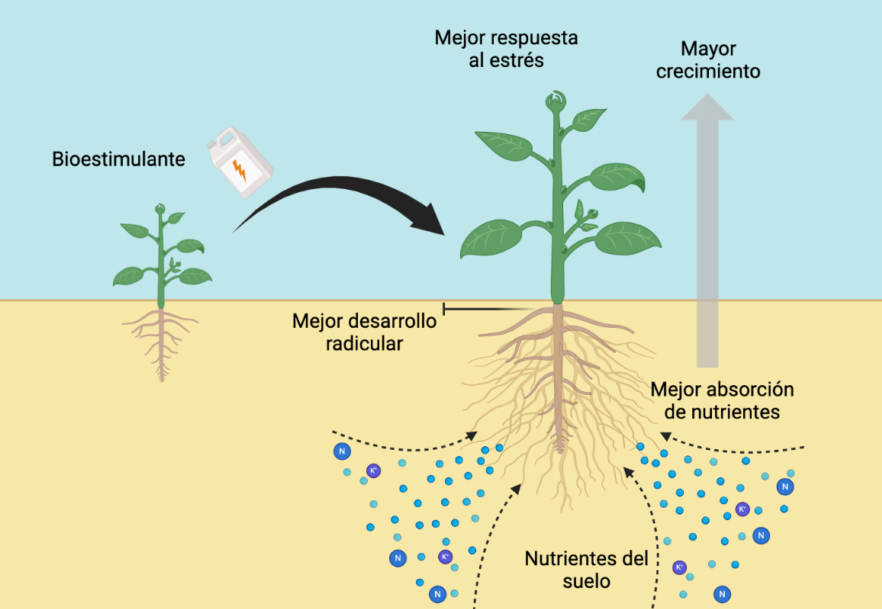
An Organic Biostimulant is a substance or mixture of substances of natural origin that, when applied to a crop, stimulates the plant's physiological processes to improve:
Nutrient absorption and efficiency.
Tolerance to abiotic stress (water, heat, salinity).
Root development.
Metabolic activity.
Crop yield and quality.
Unlike a fertilizer, its main function is not to supply nutrients in large quantities, but rather to activate the plant's internal mechanisms.
In other words:
Fertilizers provide nutrients.
Biostimulants optimize physiological function.
How does a biostimulant work in the plant?
To understand how they work, it's necessary to understand that plants operate through highly regulated enzymatic and hormonal systems.
An organic biostimulant can:
1.- Activating Enzymatic Processes
Stimulates metabolic pathways responsible for:
Protein synthesis.
Chlorophyll formation.
Energy (ATP) production.
Internal transport of nutrients.
This results in greater physiological efficiency.
2.- Stimulate root development
Many biostimulants contain bioactive compounds that promote:
Longer root system.
Greater number of secondary roots.
Better soil exploration.
A more developed root means greater absorption capacity.
3.- Modulating the stress response
Plants constantly face:
Water stress.
High temperatures.
Salinity.
Sudden climate changes.
An organic biostimulant can improve the physiological resilience of the crop, helping it to maintain metabolic activity under adverse conditions.
What are Organic Biostimulants made of?
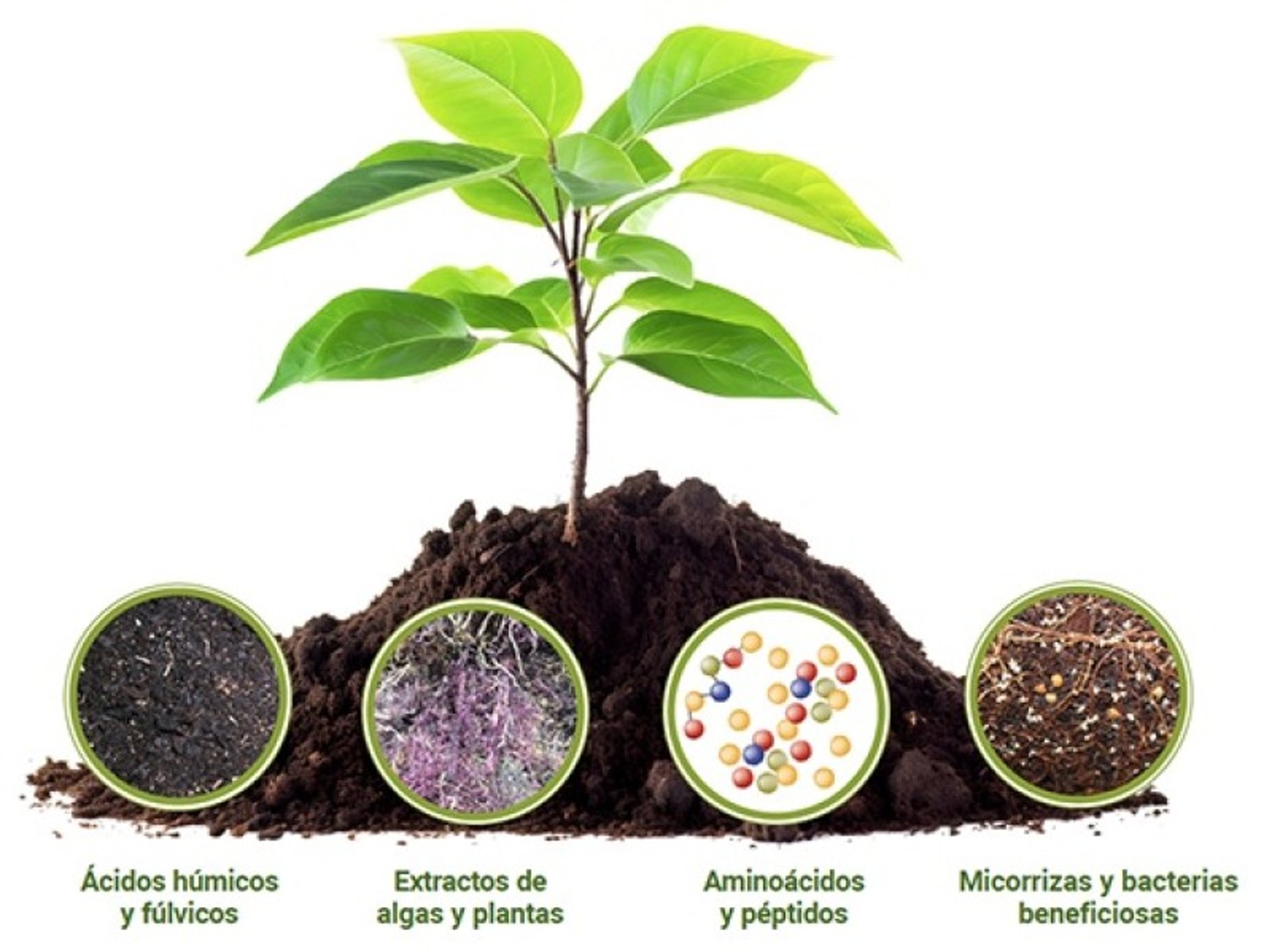
Depending on their formulation, they may include:
Seaweed extracts.
Humic and fulvic acids.
Amino acids.
Plant extracts.
Beneficial microorganisms.
The biostimulants derived from seaweed, they contain bioactive compounds such as:
Natural phytohormones.
Polysaccharides.
Trace elements.
Natural antioxidants.
These components act as natural metabolic regulators.
Practical application in crops
An organic biostimulant can be used in key stages such as:
Vegetative development.
Pre-flowering.
Flowering.
Fruit set.
Post-stress recovery.
It can be applied via foliar or root application depending on the technical objective.
The key is not to replace fertilization, but to strategically integrate it into the nutritional program.
Real productive implications
When used correctly, an organic biostimulant can contribute to:
Greater crop uniformity.
Improved fruit set.
Increased fruit quality.
Better stress tolerance.
Greater fertilizer efficiency.
In high-value crops, small physiological improvements can translate into significant increases in profitability.
Modern agriculture: efficiency over volume
The global trend in agriculture is not to apply more inputs, but to apply them better.
Organic biostimulants are integrated within a vision of:
Sustainable agriculture.
Resource optimization.
Circular economy.
Comprehensive technical management.
Its use is not due to a commercial trend, but to an evolution of agronomic management based on plant physiology.
Conclusion
An Organic Biostimulant is not a substitute of fertilizer, it's a strategic tool that enhances the internal functioning of the plant.
Its correct implementation allows:
Improve nutritional efficiency.
Increase resilience.
Optimize yield.
Enhance crop quality.
In an increasingly competitive agricultural environment, understanding and applying biostimulation tools can make the difference between traditional management and a technically optimized one.
Customized technical assessment
Each crop and each production condition requires a specific analysis.
If you wish to evaluate how to integrate a biostimulation program into your nutritional plan, the BM Génesis technical team can conduct a technical assessment to identify opportunities for improvement in your crop.
Request personalized technical advice and optimize your performance with a physiological approach.
Suscribe to our Newsletter.


© 2026. All Rights Reserved - Comercializadora de Bienes y Servicios BM Genesis, S.A. de C.V.